Oncogenic histone mutations

Recent high-throughput sequencing analyses have revealed high incidences of somatic histone lysine-to-methionine (K-to-M) mutations in multiple cancers. We have established fission yeast models in which the introduction of H3K9M or H3K36M transgenes abolishes the methylation of corresponding lysines on wild-type histones, thereby recapitulating the effects of these mutations in cancer cells. We are examining how these mutations regulate cellular functions and identifying pathways that can be targeted to selectively kill cells containing these oncogenic histone mutations.


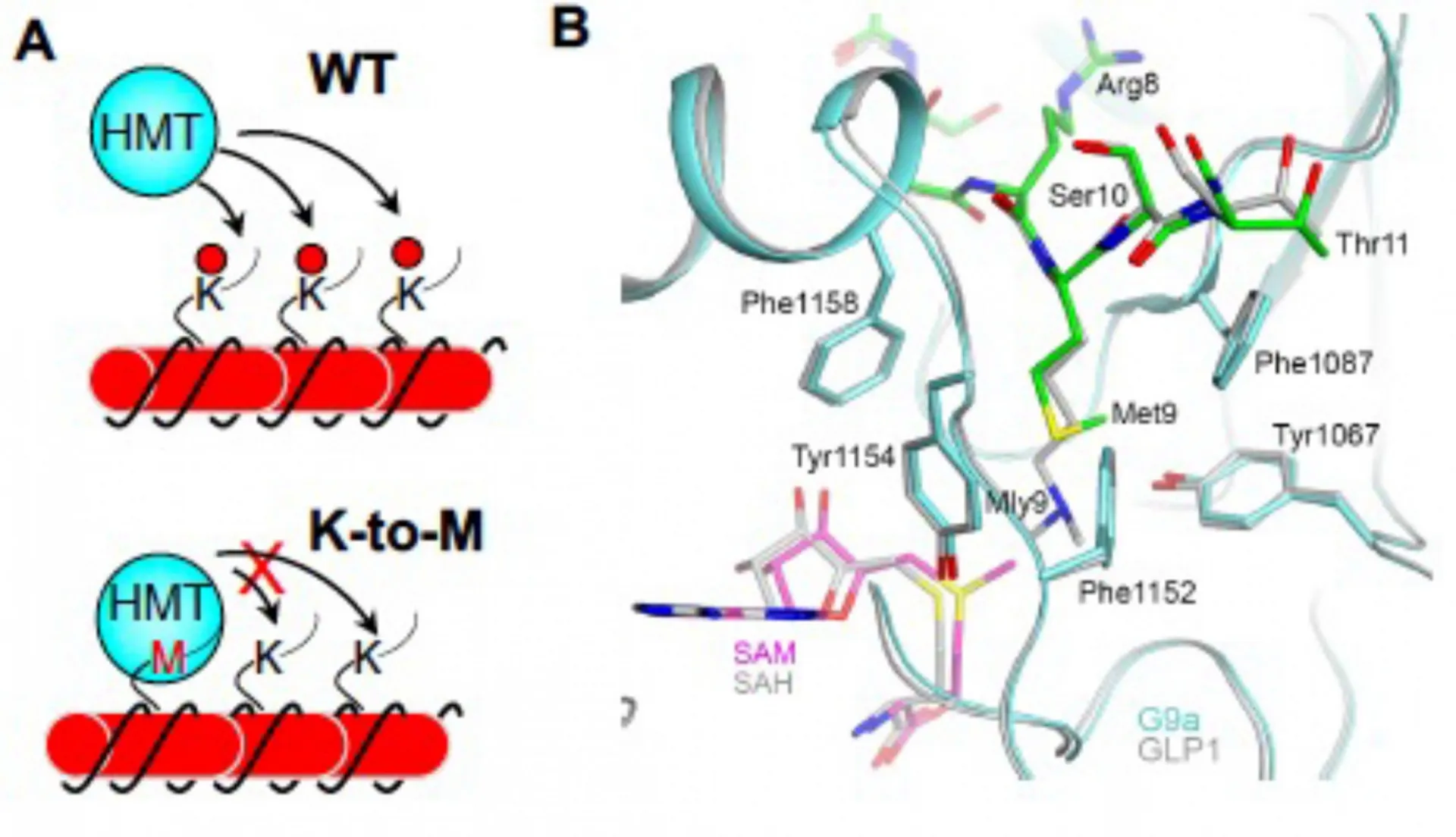
(A) Our analysis of H3K9M and H3K36M led to the following model for the function of histone lysine-to-methionine mutations: In wild-type cells, histone methyltransferases perform repeated rounds of methylation. In cells containing K-to-M mutations, the turnover of histone methyltransferases is reduced, leading to a reduction of histone methylation on wild-type histones. (B) In collaboration with Dr. Liang Tong, we solved the structure of H3K9 methyltransferase G9a in complex with an H3K9M peptide and SAM. We found that the mutated methionine occupies the same binding channel as a normal lysine and strengthens the interaction between the histone H3 tail and G9a.